
Singing Bowl Mallets: Leather & Wood, 3 Sizes
A singing bowl is only half the instrument — the mallet decides how it speaks. The same hammered brass bowl can sound sharp and glassy or warm and round depending on what touches its rim, which is why we sell strikers in three deliberate sizes instead of one generic stick. Each Nadam mallet pairs a turned hardwood handle with a stitched leather head: a compact 5.1 in model for small rims, a 7.1 in all-rounder, and a wide-head mallet for large, deep-voiced bowls. Below you will find all three with exact dimensions, a plain table matching mallet to bowl, a side-by-side of leather against the wooden mallet that already comes in the box, and photos from the 23 verified buyers who rate this line 4.65 out of 5.
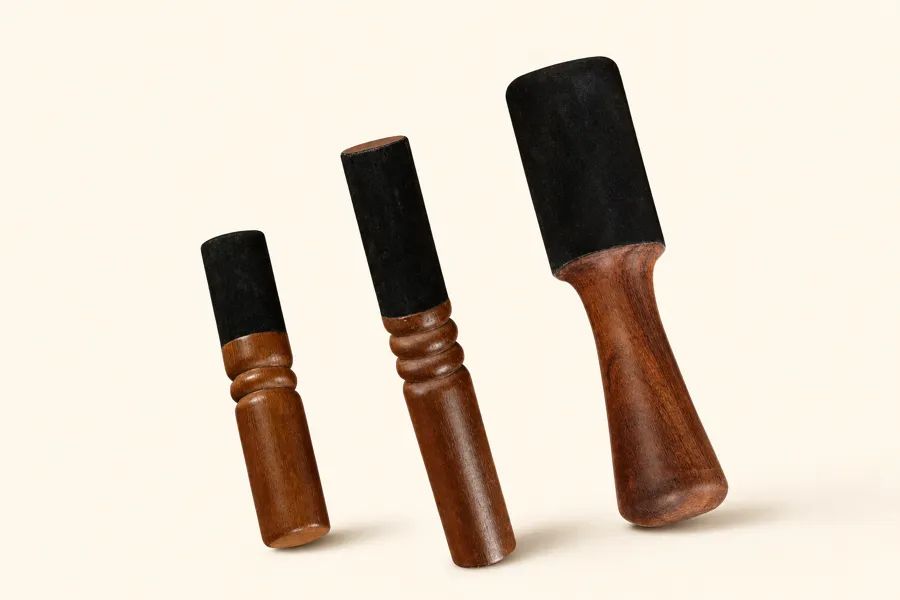
Pick Your Mallet: Three Sizes, Three Jobs
Small — 5.1 × 1 in
Sized for the 3.1, 3.5 and 4.3 in bowls. The slim head stays precise on a tight rim where a wider head would skip.
Free shipping · 30-day guarantee
Medium — 7.1 × 1 in
The one-mallet answer. The longer handle settles into the hand, keeps rim pace steady, and the 1 in head plays small and mid-size bowls with equal comfort.
Free shipping · 30-day guarantee
Large Head — 7.1 × 1.6 in
A full 1.6 in leather head with real momentum. It coaxes larger bowls into their deep, slow voice and lands the softest, roundest strike of the three.
Free shipping · 30-day guarantee
🔒 Secure Stripe checkout · Free shipping in 6-10 business days (shipping policy) · 30-day money-back guarantee
Adding a mallet keeps your cart open — put a bowl in alongside it and pay once.
Which Mallet for Which Bowl?
| Mallet | Dimensions | Best for | Sound character | Price |
|---|---|---|---|---|
| Small | 5.1 × 1 in | The 3.1, 3.5 and 4.3 in bowls | Bright and precise, easy rim control on tight rims | $14.95 |
| Medium | 7.1 × 1 in | Most bowl sizes — the all-rounder | Balanced strike, relaxed grip for longer sessions | $19.95 |
| Large head | 7.1 × 1.6 in | Larger bowls and deep tones | Soft, round strike with a slow build on the rim | $24.95 |
The logic is physical, not marketing. A small bowl carries its character in quick, bright overtones, and a slim, lighter head keeps those articulate instead of smothering them. Our bowls run from 3.1 to 6.7 in across, so the bottom of the range sits squarely in small-mallet territory. Wide, heavy bowls sit at the other end: their walls need more contact and more momentum before they open up, and that is exactly what the 4 cm large head delivers.
Between the two, the medium mallet earns its keep. If you own several bowls, or plan to, it is the size that never feels wrong. Still weighing bowl sizes themselves? Our guide to choosing between large and small singing bowls covers that decision, and the singing bowl meditation guide shows how mallet choice shapes a session once the bowl is settled on its cushion.
Leather Head or Plain Wood?
Every bowl ships with a mallet, and they earn their place. Hard contact wakes the bowl instantly, the strike is bright and clearly defined, and when you are learning where your bowl responds best, that immediacy is useful. It is a real tool, not packaging filler.
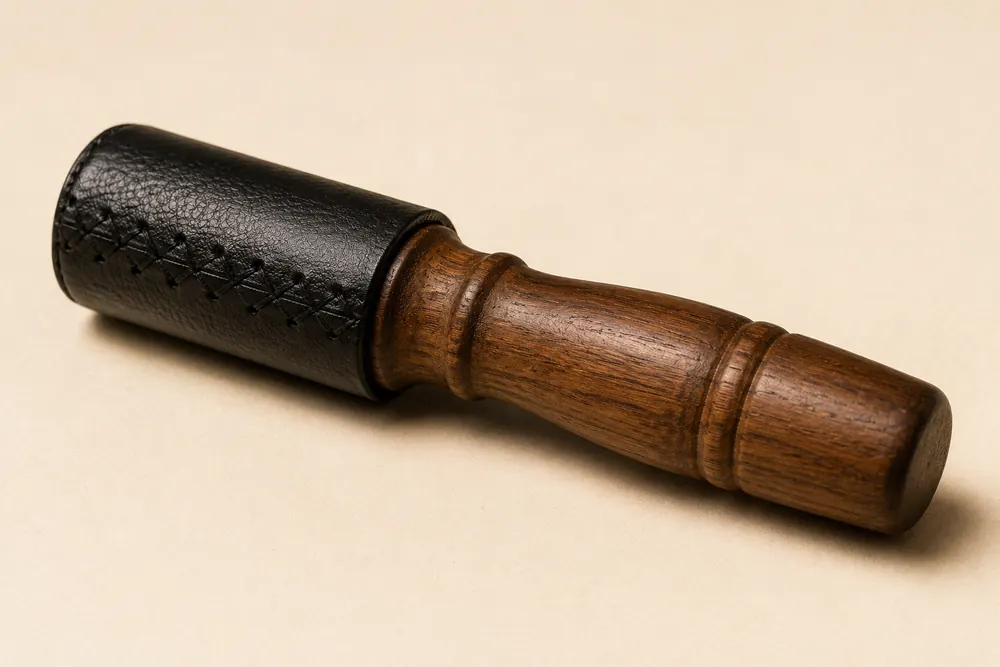
Rim singing is where bare wood asks more of you. Hard wood on a hammered brass rim wants exact, even pressure; ease off slightly and the contact skips, producing the light metallic chatter most beginners hear in their first week. A stitched leather head changes the contact itself. Leather grips the rim gently, so friction stays consistent through the whole circle: the tone builds gradually, holds smooth, and forgives small shifts in hand pressure. The strike softens too — more warmth in the body, less initial ping.
Build quality decides whether a leather mallet actually delivers that. A lumpy seam ticks against the rim on every pass. It is the detail our buyers mention most — "the edges are very even, the seam is very well done, with no bulges," as one verified buyer put it — and exactly the standard we test every mallet against before it stays in the catalog. If you own the complete singing bowl set, its 4.9 in double-headed mallet already gives you wood on one end and leather on the other; these full-size mallets add reach, weight and a more relaxed grip on top of it.
Grip, Pace and Care
Two habits cover most of it. For strikes, hold the handle loosely near its end and let the head fall onto the bowl wall rather than pushing it — the bowl does the sustaining, not your wrist. For rim singing, grip lower and firmer, keep the leather in full contact with the outer rim, and circle slowly; if the bowl squeals, slow down and add a touch of pressure rather than speed.
Care is minimal: keep the leather dry and out of direct sun, and wipe it with a soft cloth now and then. Step-by-step technique, with hand positions, lives in our guide on how to use a singing bowl; and if the bowl anchors your evening wind-down, see how to run a sound bath at home for pacing a longer session.
The Mallet Line, by the Numbers
Average rating across all verified buyers of this mallet line
— Verified buyer feedback, verified order history, 2026
Verified buyer reviews recorded across the three mallet sizes
— Verified order history, 2026
Handle length range, from the small (5.1 × 1 in) to the medium and large head (both 7.1 in long)
— Official dimension sheets, 2026
What Mallet Buyers Report
"This is verry beautiful, best quality, i love it, arrived verry fast, i recomand it. thank you verry much."
— Verified buyer
"A very good stick! The edges are very even, the seam is very well done, with no bulges. The wood is heavy, just right! Good sound. Very pleased!"
— Verified buyer
Buyer photos and their own wording. Read more buyer feedback on our reviews page.
Who tested these
Mira Chandran · Sound practitioner & product lead at Nadam
Mira has been leading small-group sound baths for years. She plays every size Nadam sells — strike tone, rim singing, sustain, how the bowl sits on its cushion — before that model earns a place in the catalog.
Mira plays each mallet size against several bowl diameters before we recommend a pairing — read how we test or learn more about Nadam. Reviewed and updated July 4, 2026.
Free shipping · 30-day money-back guarantee · Secure Stripe checkout
New to singing bowls? Our Tibetan singing bowls — from $39.95 already includes a wooden mallet.
Singing Bowl Mallet FAQ
Which mallet fits a small singing bowl?
The small mallet, at 5.1 x 1 in, is sized for the 3.1, 3.5 and 4.3 in bowls. Its slim leather head keeps contact precise on a tight rim, so circles stay smooth instead of skipping. If you also play larger bowls, the medium 7.1 x 1 in mallet covers both comfortably.
Do I need a leather mallet if my bowl came with a wooden one?
Not to get started. The mallet included with every bowl strikes cleanly and can raise a rim tone. A leather head simply makes that easier: softer contact means less squeak, a warmer strike, and steadier rim singing. Many buyers add a leather mallet once they start playing daily.
Can I use the large-head mallet on a small bowl?
You can strike with it — the wide 1.6 in leather head gives a soft, round tone on any bowl. For rim singing on the smaller bowls, though, it feels oversized and is harder to hold in even contact. Choose the small or medium mallet for rim work on smaller bowls.
How fast is shipping, and what if I pick the wrong size?
Shipping is free and typically takes 6-10 business days (a little longer outside the US). Checkout runs through Stripe, so your card details stay secure. If the size does not suit your bowl, every mallet is covered by our 30-day money-back guarantee — write to [email protected] and we will sort it out.